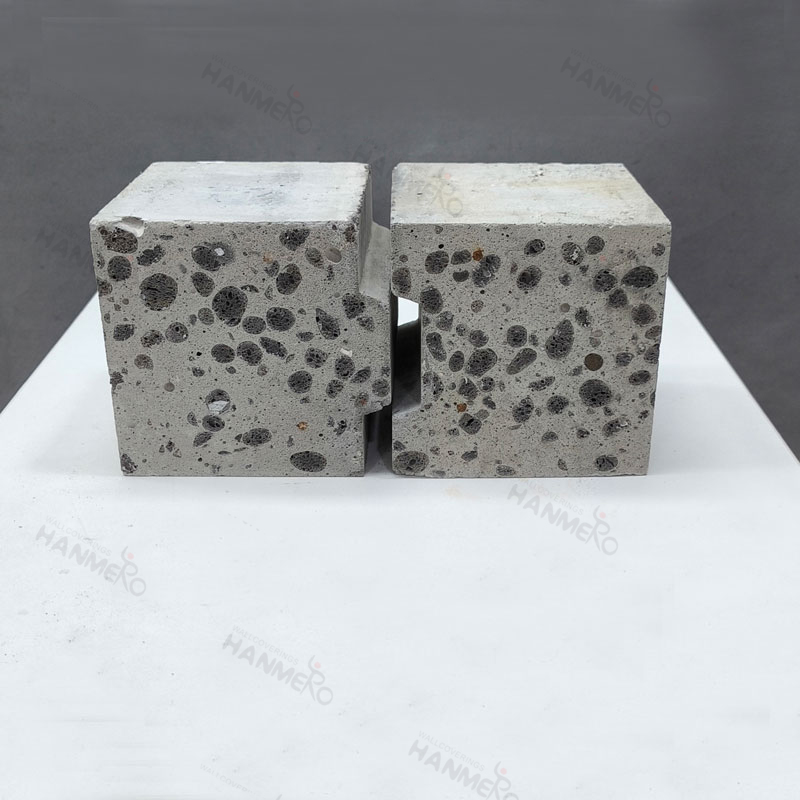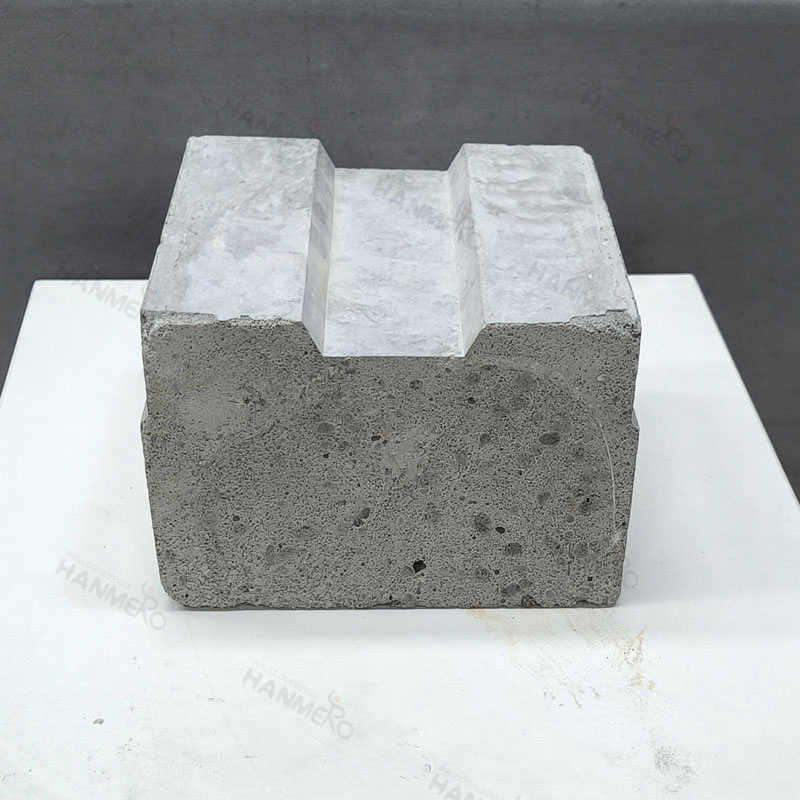
When builders select lightweight prefabricated slabs, they often compare Ceramsite Slab with Autoclaved Aerated Concrete Panel, two mainstream lightweight building materials on the market, and the performance difference between them is very clear. In terms of raw material structure, Ceramsite Slab uses high-temperature sintered expanded clay as aggregate, and the internal particles are dense and not easy to absorb water, while the interior of aerated concrete panel is a large number of independent air holes formed by chemical foaming, which has a much higher water absorption rate than Ceramsite Slab.
In terms of structural strength, under the condition of the same thickness, the impact resistance and compressive strength of Ceramsite Slab are 30% to 40% higher than that of aerated concrete panel, and it is not easy to produce edge chipping and damage during hoisting and on-site processing. In terms of durability, Ceramsite Slab has better freeze-thaw resistance, and after more than 100 freeze-thaw cycles, the strength loss is less than 5%, while aerated concrete panels are easy to have performance degradation in long-term humid and alternating cold and hot environments. In terms of construction adaptability, the surface of Ceramsite Slab is easier to bond with mortar, tiles and decorative finishes, and the hollowing rate of subsequent finishing construction is much lower. These performance differences make Ceramsite Slab more suitable for scenarios with high requirements for durability and construction stability.