When you start planning an interior renovation, one of the first decisions you will face is choosing the right partition material to divide indoor spaces, and two of the most common options on the market are Expanded Clay Cement Panel and traditional gypsum board. While both are classified as lightweight partition materials, their core properties, service life and suitable application scenarios are very different, and choosing the wrong one can lead to costly maintenance problems within just a few years after completion.
Gypsum board has been the standard choice for interior partitions for decades, mainly because it is low cost, easy to cut and fast to install for simple non load bearing walls. However, it has several inherent limitations that are hard to ignore. Standard gypsum board is not fully waterproof, so it will start to soften, deform and grow mold when used in humid areas like bathrooms, laundry rooms or basements. It also has relatively poor impact resistance, and a hard knock from moving furniture or a heavy object can easily create a hole that needs patching and repainting. Most standard gypsum board only offers basic C grade fire resistance, and it will start to lose structural integrity quickly when exposed to high temperatures, releasing large amounts of smoke and dust in a fire scenario.
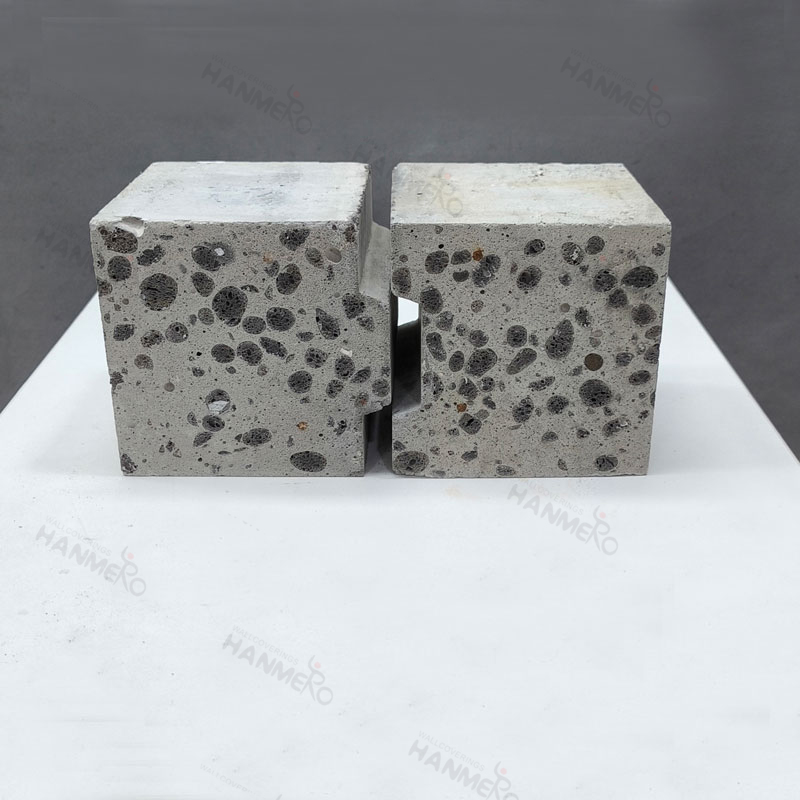
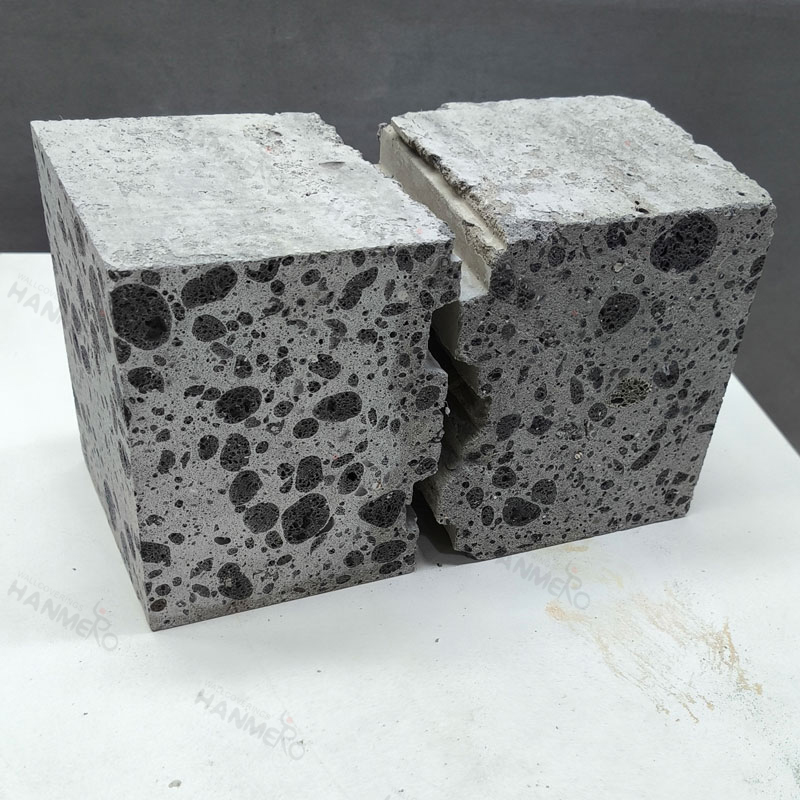
Expanded Clay Cement Panel, by contrast, is engineered to address almost every weakness of standard gypsum board, making it a far more durable choice for high demand environments. Since its main raw material is cement and expanded clay aggregate, it is completely waterproof and mold proof. Even if you leave it submerged in water for 30 days, its structural strength will not drop by more than 5 percent, and it will not absorb moisture to become soft or deformed. This makes it a perfect replacement for gypsum board in kitchens, bathrooms, basement partitions and even exterior wall infill panels that are occasionally exposed to rain.
In terms of fire safety, Expanded Clay Cement Panel is classified as a Class A1 non combustible material, the highest possible fire safety rating for building materials. It will not burn at all even when exposed to direct flame for hours, and it will not release any toxic or harmful fumes during a fire. This is a critical safety upgrade for public buildings like schools, hospitals, shopping malls and office buildings, where strict fire codes require all interior partition materials to meet the highest non combustible standards. Unlike gypsum board, which often requires additional fire proof coating or extra layers to meet fire codes, Expanded Clay Cement Panel meets Class A1 requirements straight out of the box, no extra processing needed.
When it comes to long term cost, Expanded Clay Cement Panel also delivers better value over its full service life. While the upfront material cost is slightly higher than standard gypsum board, it has a service life of more than 50 years, compared to 10 to 15 years for a standard gypsum board wall that requires regular repair, patching and replacement. It is also strong enough to hang heavy items like water heaters, wall cabinets and large televisions directly on the surface without needing special embedded backing parts, something that is almost impossible to do safely on a standard gypsum board wall. For renovation projects that require long term durability and low maintenance costs, Expanded Clay Cement Panel is clearly the more practical and cost effective choice.